How to Write a Welcome Sequence That Turns Subscribers Into Buyers
Aug 01, 2026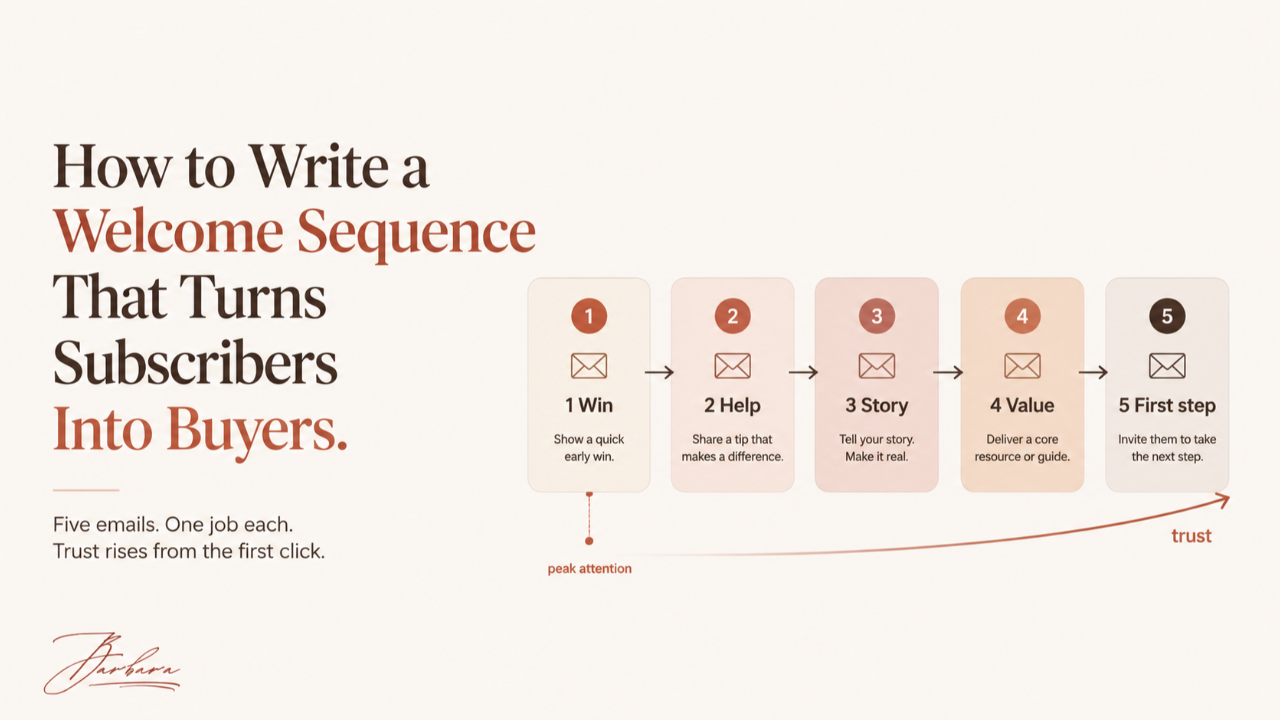
A welcome sequence is the first set of automated emails a new subscriber receives, and it does more to turn subscribers into buyers than almost any other email you send, because it arrives when attention and trust are at their peak. A strong sequence delivers the promised lead magnet immediately, gets the subscriber a fast real win, tells them who you are and what you stand for, sets the expectation that your emails are worth opening, and points toward a natural first step, all before it ever hard-sells. You write it by mapping four or five short emails, each with one job, that move a new subscriber from "I grabbed a freebie" to "I trust this person and I'm curious what they offer."
It's the highest-leverage email you'll ever write, because you write it once and it warms every new subscriber forever. So it's worth doing deliberately.
The first emails decide everything after them
The moment right after someone opts in is the peak of their attention. They just raised their hand, they actually remember who you are and what they wanted, and they're expecting to hear from you. That window is the warmest a subscriber will ever be, and it closes fast.
A strong welcome sequence uses that window. A weak one, or none at all, wastes it. If the only thing a new subscriber gets is an automated "here's your download" and then silence for two weeks, the next time you email, they've forgotten who you are and why they signed up. The relationship that could have started warm starts cold instead, and you spend the following months trying to rebuild attention you already had and let slip.
This is the very start of the runway, the stretch of trust-building that every later sale depends on. The welcome sequence is where warming begins, which is why it carries so much weight in how email turns subscribers into buyers. And it only works because the lead magnet below it brought in the right person to welcome.
Not just a freebie delivery
Here's the failure to avoid: treating a single automated email as your welcome sequence. Someone opts in, an email fires with the download link, and that's the whole thing. That's not a welcome sequence. It's a delivery receipt.
A real welcome sequence is a short series, usually four or five emails over the first several days, that does relationship work. Delivering the freebie is only the first small job. The rest of the sequence gets the subscriber a real result, introduces you as a person, sets the expectation that your emails are worth opening, and gently points toward a first step. One email can't do all of that without becoming a wall of text nobody reads. A series can, because each email carries one piece.
It's also worth distinguishing the welcome sequence from the ongoing nurture that follows it. The welcome sequence is the specific first stretch, the opening handshake. The nurture is the steady, value-first rhythm that runs for weeks and months afterward. Both matter, but they're different jobs, and this article is about getting the opening right.
Five jobs, not one pitch
A welcome sequence has five jobs to do. They map loosely onto emails, but think of them as jobs rather than a rigid script, because the order and pacing flex by audience.
Deliver the win. Get them the lead magnet, and more importantly, get them a fast, real result from it. The download is not the win; the outcome the download produces is. Helping a new subscriber actually get that first result is the single most powerful trust-builder you have, which is the whole reason a fast first win matters so much this early.
Introduce yourself and your point of view. Tell them who you are, why you care about this problem, and what you believe about it. This is what turns you from an anonymous sender into a person they know. People buy from people, and the welcome sequence is where you stop being an email address and become someone.
Set the expectation. Tell them what kind of emails they'll get from you and why opening will be worth their time, and then immediately prove it by being useful. This trains the habit of opening your emails, which is the quiet foundation of a warm list.
Build trust through value, not pitching. Give something genuinely useful early, before you ask for anything. Starting the relationship with generosity sets the tone that you're here to help, not just to sell, and it earns the right to make an offer later.
Point to a natural first step. End by pointing toward a relevant next step, softly. Not a hard sell, just an honest invitation, often to an entry offer, sometimes to your flagship, sometimes simply to reply. This is where the welcome sequence hands a new subscriber onto the first rung of your value ladder, and where a strong offer starts to matter.
Even the welcome sequence sells the click
When the sequence does point to a first step, remember the core rule of email: the email's job is to earn the click, not to close the sale in the inbox. That applies here too.
So even the email that points to your first offer stays light. It creates enough curiosity and trust that clicking through feels worth it, and then it lets the sales page do the converting. The mistake is cramming the whole pitch, every feature, the price, the guarantee, into a welcome email, which turns a warm introduction into a wall of selling and gets deleted. Keep each email to one idea, curiosity forward, and let the page carry the weight of the sale.
A simple five-email shape
Here's a concrete shape to adapt. Treat it as a starting point, not a template to copy word for word, because the timing and count should flex to your audience.
Email 1, immediately. Deliver the lead magnet and set up the fast win. Warm, short, and clear: here's what you asked for, and here's the very first thing to do with it.
Email 2, the next day. Help them actually get the win. Remove the friction, answer the obvious first question, nudge them to use the thing rather than let it sit in their inbox.
Email 3, day two or three. Your story and point of view. Why you do this, what you believe about the problem, what makes your approach different. This is where you become a person.
Email 4, day four or five. A genuinely useful teaching email with no ask at all. Pure value. This is the email that proves opening you is worth it, and it earns the invitation that comes next.
Email 5, day five to seven. The natural first step, softly. A relevant invitation to your entry offer, your flagship, or simply to reply and tell you what they're working on. One clear, honest next step.
Notice the ratio: four emails that give, one that invites. The sequence earns the ask by giving first, which is the same give-before-ask balance that keeps a whole list warm.
Building your sequence
Here's how to write one.
- Start from the win the lead magnet promised. Your first emails exist to deliver that promised result fully. Build emails one and two around getting the subscriber to the outcome they signed up for.
- Decide the one point of view. Pick the single idea you most want a new subscriber to walk away believing about the problem and your approach. Let your story email carry it.
- Write each email to one job. If an email is trying to do two jobs, split it into two. One idea per email keeps them short and openable.
- Keep the give-before-ask ratio. Most of the sequence gives; only the final email invites. You're depositing trust before you make any withdrawal.
- Make the first step genuinely relevant. The offer you point to should be a natural next step from the lead magnet they came for, the next rung up, not a random pitch for something unrelated.
- Automate it and let it run. Set it to send automatically on a consistent schedule, then leave it alone. Written once, it warms every single new subscriber the same way, forever.
That last point is why this is the highest-leverage email work you can do. A launch email goes out once. A welcome sequence works on every new subscriber for as long as it's running, which makes the hours you spend on it some of the best-spent hours in your whole business.
Common welcome sequence mistakes
- Sending only a delivery email. One "here's your download" and then silence wastes the warmest window you'll ever have. Send a real sequence.
- Hard-selling in email one. Pitching before any trust exists reads as taking before giving, and it sets the wrong tone for the whole relationship.
- Front-loading the pitch before the win. Asking for a sale before delivering the promised result breaks the implicit deal the subscriber made when they opted in.
- Making it all about you. Your story matters, but only in service of the subscriber. A sequence that's pure biography with no value for them falls flat.
- Never setting the expectation. If you don't tell people why your emails are worth opening, and then prove it, opens decay from the start.
- Building trust that goes nowhere. A warm sequence with no first step at the end leaves the subscriber liking you with no idea what to do next.
- Cramming the whole pitch into one email. Sell the click and let the page convert. A wall of selling in the inbox gets deleted.
- Wrong length. Ten emails of throat-clearing exhausts goodwill; a single email does too little. Four or five, each with a job, is the usual sweet spot.
Where the welcome sequence sits
The welcome sequence is the opening stretch of the email layer, the first part of the runway. It receives the subscriber the lead magnet brought in, starts the trust the whole list layer is built on, and begins the climb up the value ladder. In a sense it's where four layers meet for a new subscriber at once: the lead magnet that brought them, the email list that warms them, the fast first win that convinces them, and the offer they'll eventually be invited toward.
That's also why a weak welcome sequence can quietly cause a cold list. If new subscribers are never properly welcomed, the list never warms, and later a launch to that list falls flat, which looks like a launch problem but started here. It's the same trap as why a cold list sinks a good launch. If you want the whole system, How to Diagnose Why Your Course Business Isn't Selling walks all seven layers in order, and Why Is My Online Course Not Selling? is the short way in.
The short version
The welcome sequence is the highest-leverage email you'll write, because it works at the peak of a subscriber's attention and it warms everyone who ever joins. Give them the win they came for, become a real person, set the expectation that your emails are worth opening, give generously before you ask, and end with one soft, relevant first step. Write it once, automate it, and every new subscriber starts the relationship warm instead of cold.
If subscribers come in but never buy, the leak might be your welcome sequence, or a layer above or below it. The free Course Business Diagnostic finds where you're actually losing them.
Take the free Course Business Diagnostic
FAQ
How many emails should a welcome sequence have? Usually four or five, enough to deliver the win, introduce yourself, prove your emails are worth opening, and point to a first step, without exhausting the subscriber's goodwill. Fewer than that and you're skipping jobs that build trust; many more and you risk overstaying the welcome before the relationship can carry it. The right number is however many it takes to do the five jobs cleanly, with one job per email, which for most people lands at four or five.
How soon should the first email arrive? Immediately, within seconds of someone opting in. The first email delivers what they just asked for, and any delay there breaks trust at the worst possible moment, right when attention is highest. After that, spacing the remaining emails a day or so apart works well, close enough to stay warm while you're fresh in their mind, far enough that you're not crowding their inbox. The immediacy of email one matters most.
Should I sell in my welcome sequence? Yes, but softly, and only after you've given first. The sequence should deliver real value and a genuine win before it ever points to an offer, and when it does, the invitation should be light and relevant rather than a hard pitch. Selling too early, before any trust exists, backfires. Selling at the end, after four emails of genuine help, feels like a natural next step rather than a demand. Give first, then invite.
What's the difference between a welcome sequence and a nurture sequence? The welcome sequence is the specific first series a new subscriber gets, focused on delivering the win, introducing you, and starting the relationship. The nurture sequence is the ongoing, value-first emailing that runs for weeks and months afterward to keep the list warm between offers. The welcome is the opening handshake; the nurture is the continuing relationship. You need both, but the welcome comes first and sets the tone everything after it builds on.
What if someone doesn't open the first email? Some won't, and that's normal, but you can improve the odds. Make the first email's subject clear and tied to what they just signed up for, since a new subscriber is looking for exactly the thing they opted in to receive. For those who still don't open, a well-built sequence keeps sending the following emails anyway, so a missed first email isn't a lost subscriber. Some email tools also let you resend the first email to non-openers with a fresh subject line, which is worth doing for the delivery email specifically.