Why Courses Don't Sell
Practical guides for course creators, from testing an idea before you build it to finding out why a launched course isn't selling. Start with the free tool that fits where you are right now.
Haven't built your course yet?
Find out what evidence you have and what to test next.
Take the Free Course Validation CheckAlready launched but not getting sales?
Find the first weak point in your course business.
Take the Free Course Business Diagnostic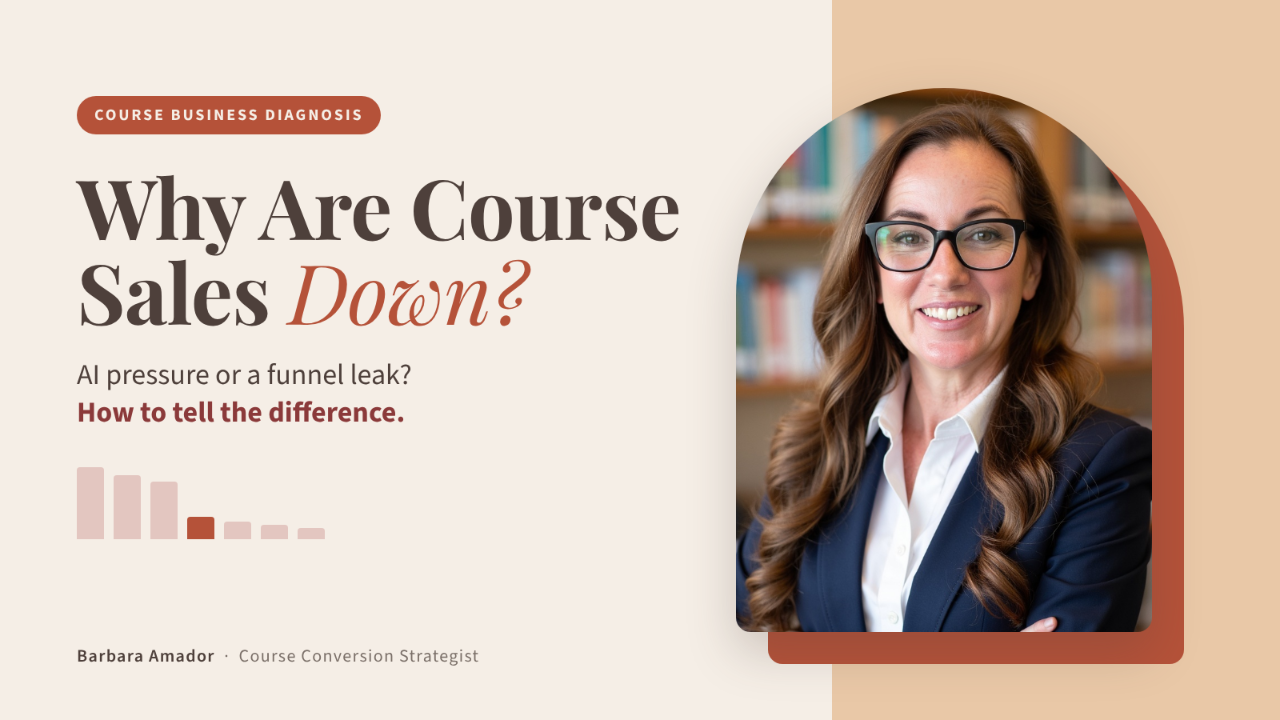
By Barbara Amador, Course Conversion Strategist · Published
Some course creators are seeing sales fall in 2026, and AI is a real part of the reason. Buyers are more hesitant to pay f...
By Barbara Amador, Course Conversion Strategist · Published
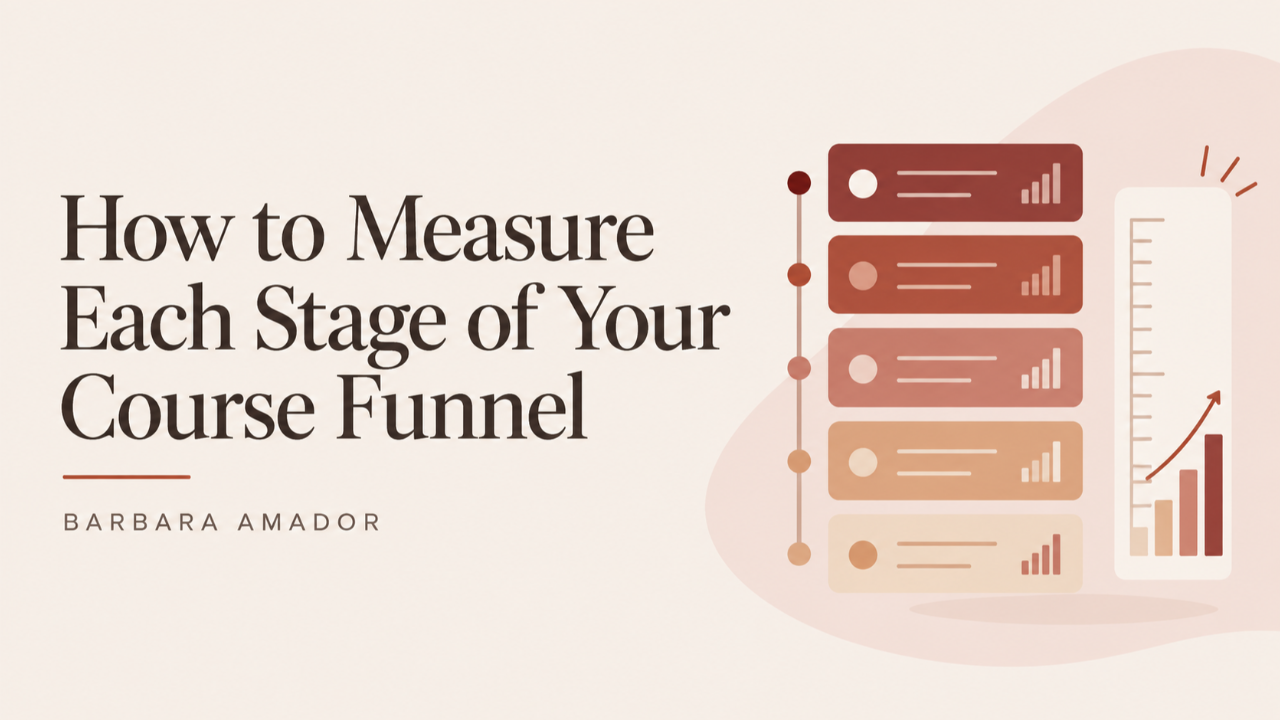
You measure an online course funnel one stage at a time, with one number per stage: opt-in rate, early email engagement,...
By Barbara Amador, Course Conversion Strategist · Published
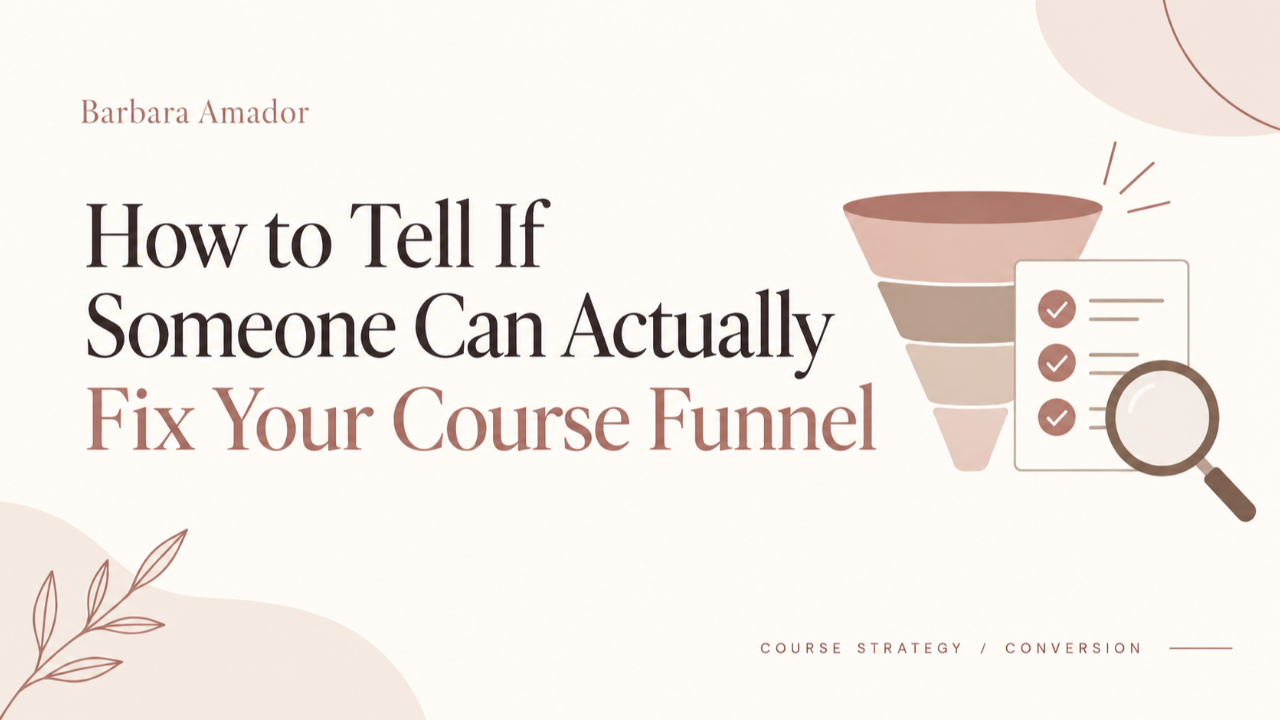
Online course conversion optimization is worth buying when the work can be judged on three things: how the funnel was an...

By Barbara Amador, Course Conversion Strategist · Published · Last reviewed
Choose a course conversion consultant who diagnoses before they prescribe. Before you ...
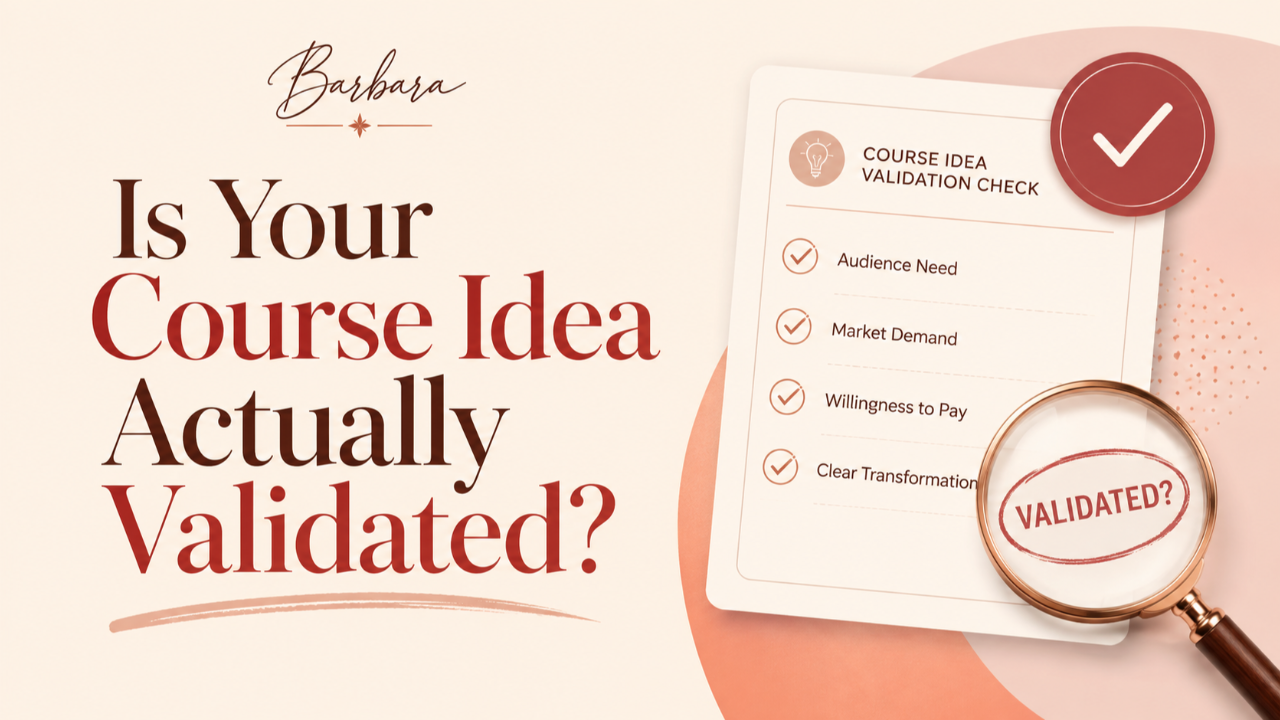
To validate an online course idea, look for evidence that real people already spend time or money trying to solve the problem. Start with customer conversations, then test commitment through a waitlis...
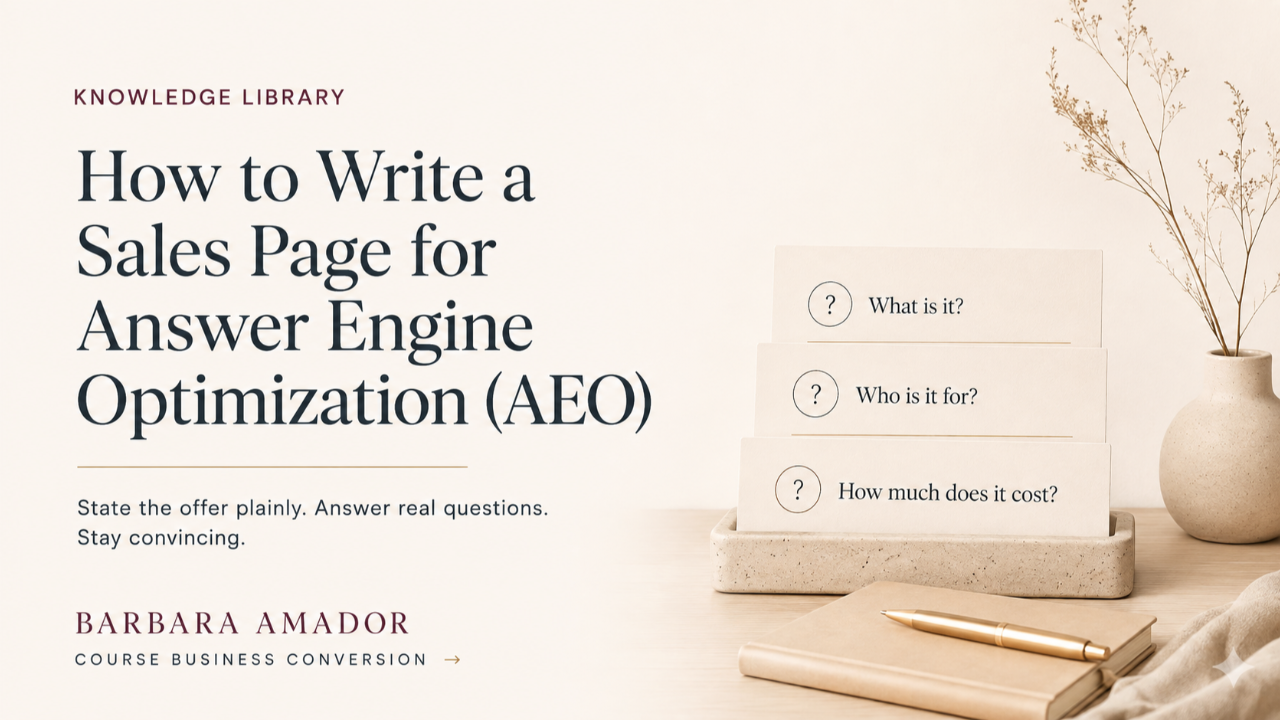
Type a question about a course topic into ChatGPT or Perplexity, and the answer often comes back with a name attached: a program, a person, a resource that already stated things plainly enough to quot...
There is no single "good" sales page conversion rate, because the same rate can be excellent or terrible depending on the context. What counts as good depends on how warm the traffic is, the price of ...
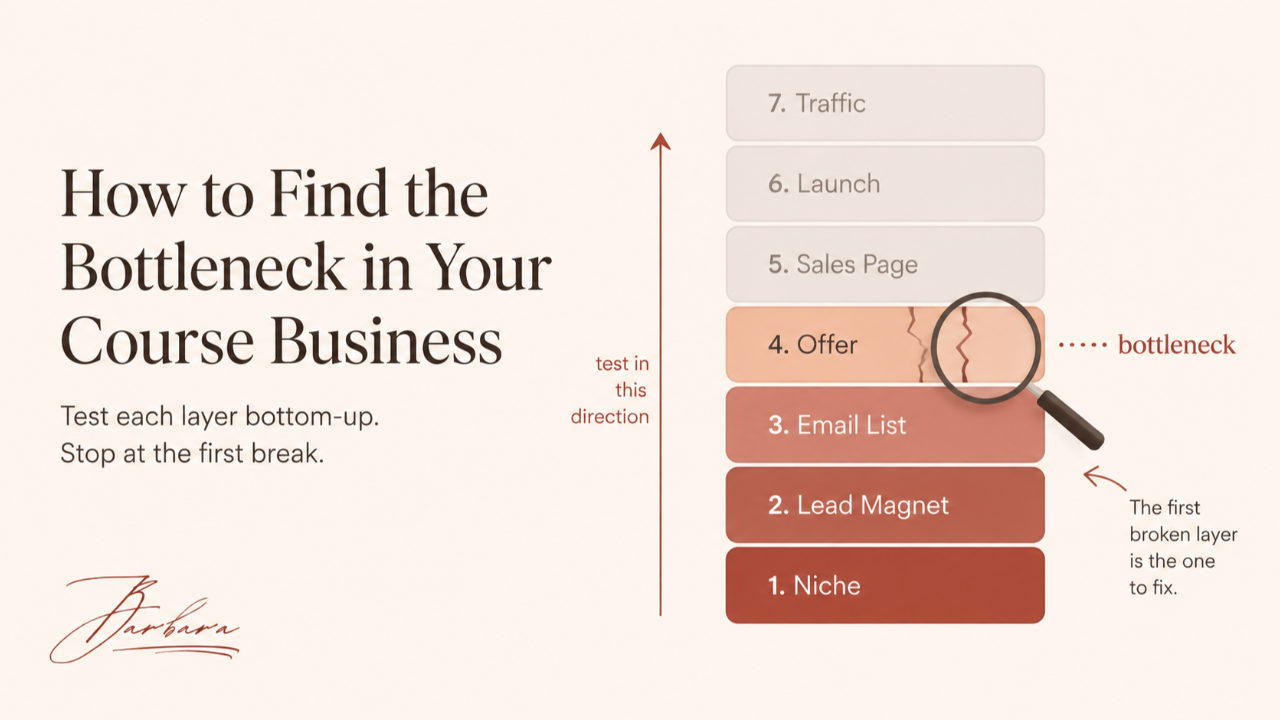
To find the bottleneck in your course business, test each of the seven layers in order from the bottom up, niche, lead magnet, email list, offer, sales page, launch, traffic, and stop at the first one...
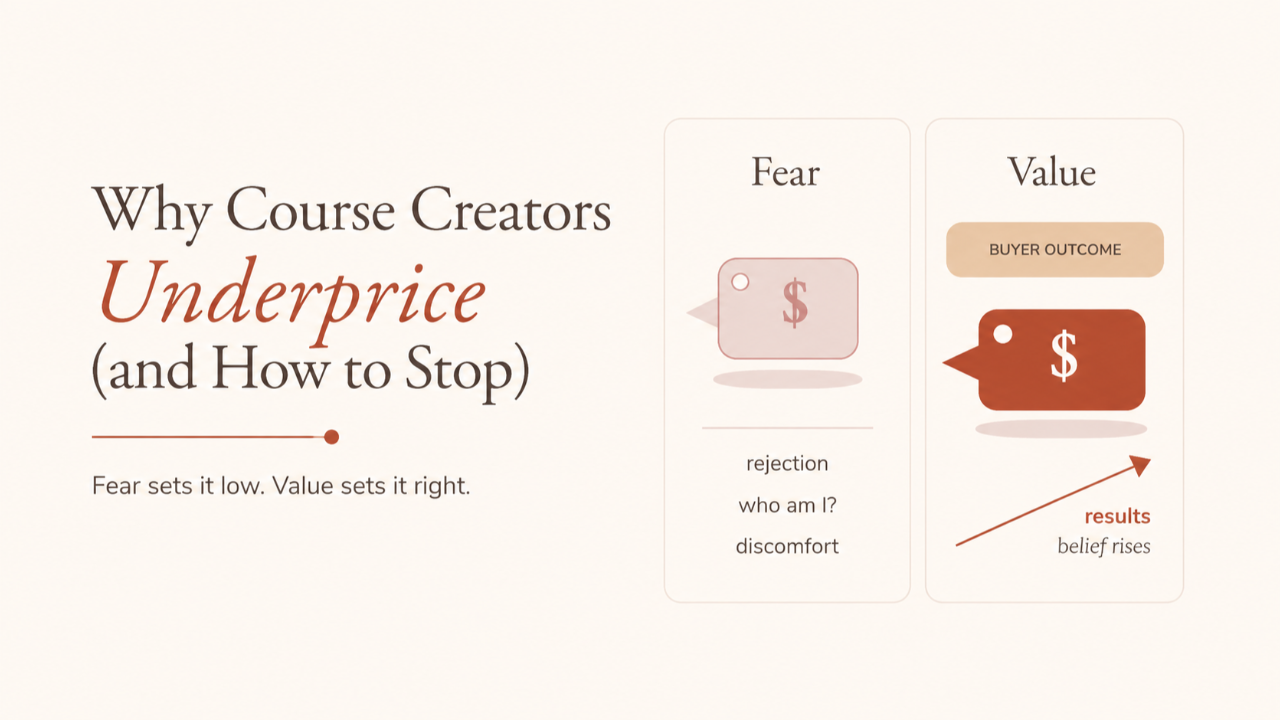
Course creators underprice mostly for emotional reasons, not strategic ones: fear of rejection, impostor feelings, discomfort with charging, and a belief that a low price is generous. A low price feel...
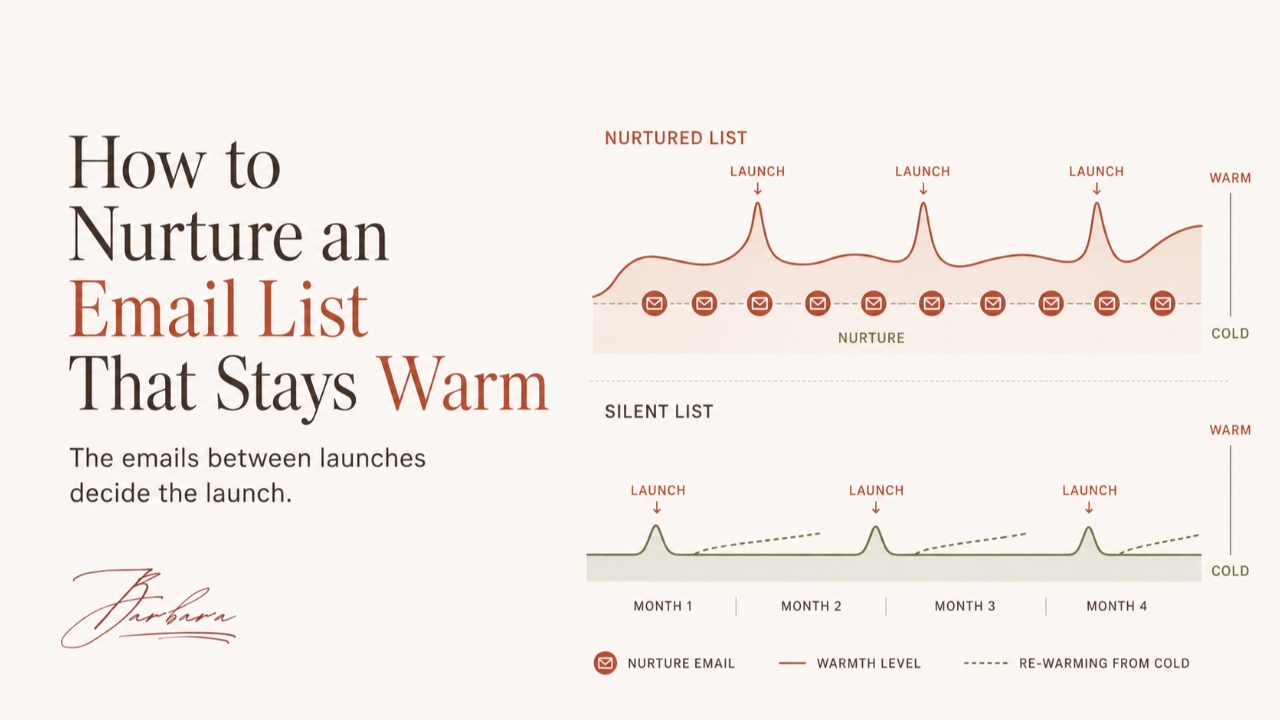
Nurturing an email list means sending genuinely useful, connection-building emails on a consistent rhythm between your offers, so that when you do ask for a sale, it lands on people who already trust ...
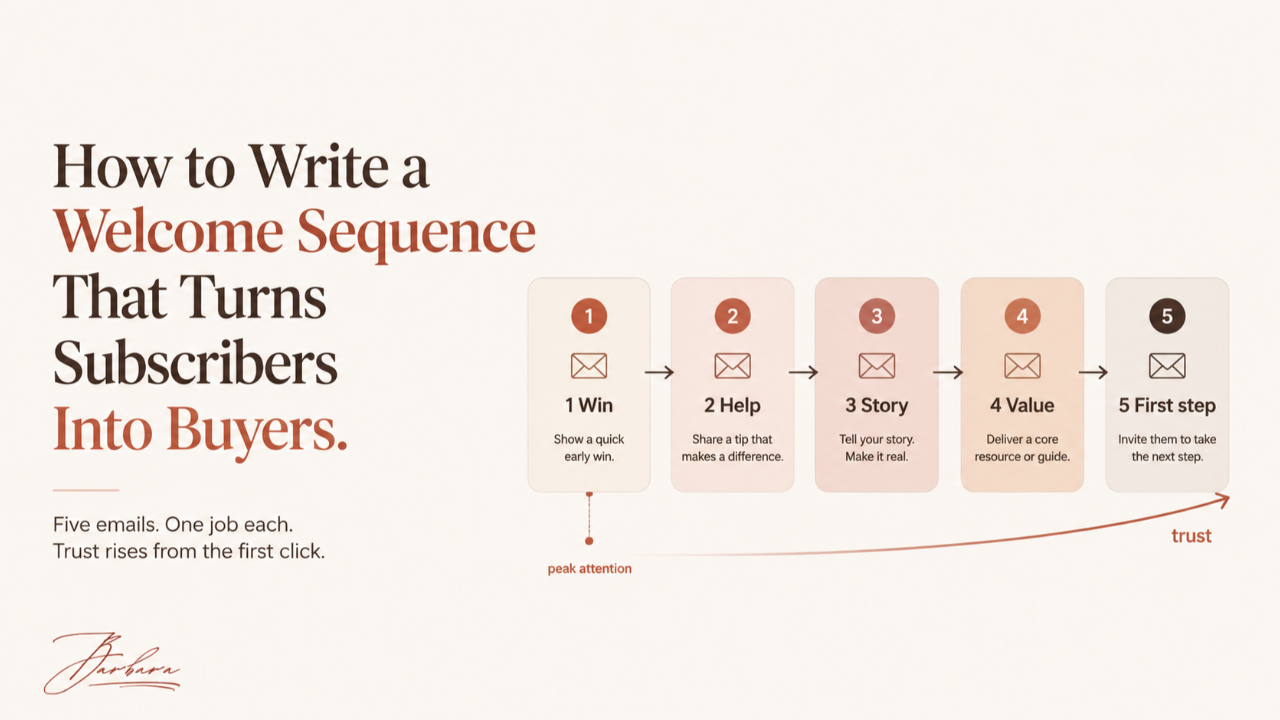
A welcome sequence is the first set of automated emails a new subscriber receives, and it does more to turn subscribers into buyers than almost any other email you send, because it arrives when attent...
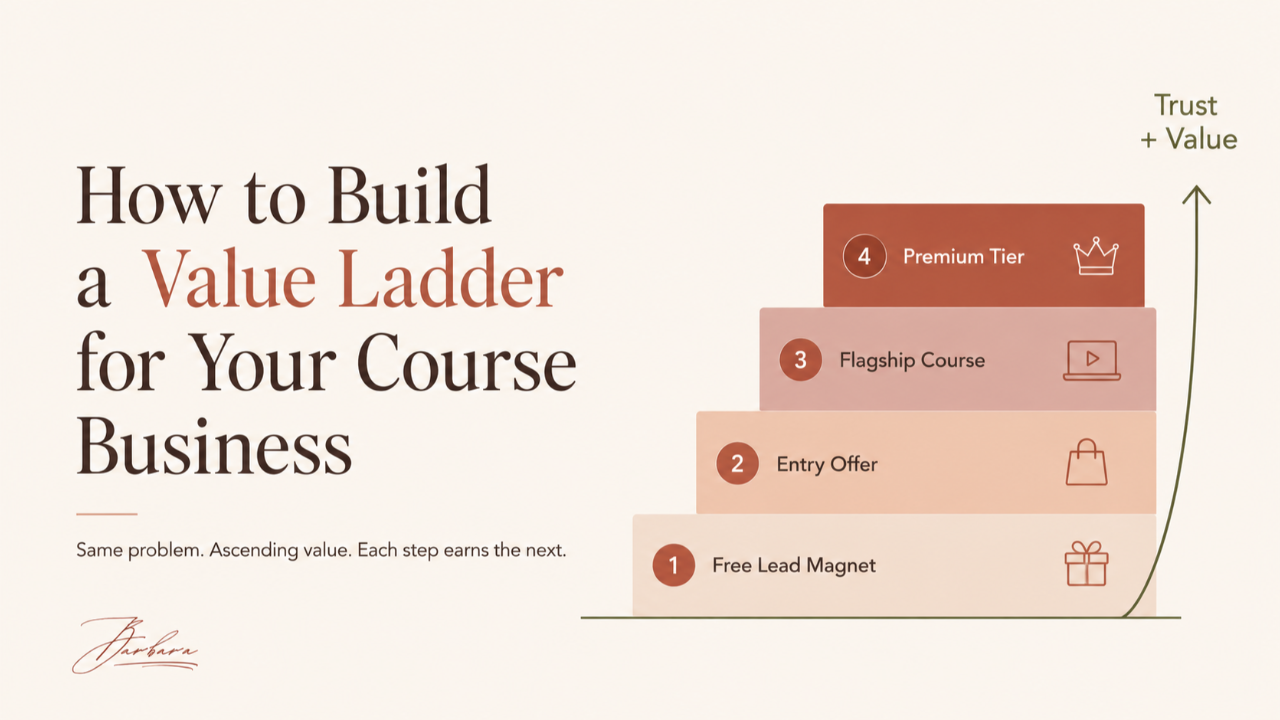
A value ladder is the sequence of offers a buyer can climb, from a free first result up through progressively bigger, higher-priced solutions to the same core problem. It works because trust and value...
